Urothelial carcinoma (UC), also referred to as transitional cell carcinoma, is the predominant form of bladder cancer, accounting for approximately 90% of all cases. This malignancy originates in the urothelial cells that line the interior surface of the bladder. Alfa Cytology provides specialized research services tailored to advance comprehension and treatment strategies for urothelial carcinoma.
Introduction to Urothelial Carcinoma
Urothelial carcinoma is characterized by its potential to affect various segments of the urinary tract, including the renal pelvis, ureters, bladder, and urethra. It is estimated that approximately 15% to 25% of invasive urothelial carcinomas exhibit morphologic variations, which can manifest as "divergent differentiation" along other epithelial lineages such as squamous, glandular, trophoblastic or small cell/high-grade neuroendocrine differentiation either individually or in combination.
Summary of subtypes and divergent differentiation of urothelial carcinoma.
|
Divergent Differentiation of Urothelial Carcinoma (UC) |
Histological Subtypes of Urothelial Carcinoma |
- Squamous cell neoplasms/UC with squamous differentiation (SQD)
- (Pure) squamous cell carcinoma (SCC)
- Verrucous carcinoma
- Glandular neoplasms/UC with glandular differentiation
- (Pure) adenocarcinoma
- Tumors of mullerian type/UC with mullerian differentiation
- Clear cell adenocarcinoma (CCA)
- Endometrioid carcinoma (EDCA)
- High-grade neuroendocrine carcinoma
- Small cell carcinoma (SMCC)
- Large cell neuroendocrine carcinoma (LCNEC)
- UC with trophoblastic differentiation
|
- Micropapillary urothelial carcinoma (MPUC)
- Plasmacytoid urothelial carcinoma (PUC)
- Nested urothelial carcinoma (NVUC) and large nested urothelial carcinoma
- Tubular/microcystic urothelial carcinoma
- Lymphoepithelioma-like urothelial carcinoma (LELC)
- Lipid-rich urothelial carcinoma
- Clear cell (glycogen-rich) urothelial carcinoma
- Giant cell urothelial carcinoma
- Sarcomatoid urothelial carcinoma
- Poorly differentiated urothelial carcinoma
- Urachal and diverticular neoplasms
- Urachal carcinoma
|
Research on Urothelial Carcinoma
Research in urothelial carcinoma is focused on understanding its molecular and genetic underpinnings, as well as developing innovative therapeutic approaches. Key areas of investigation include the follows.

Genomic Characterization
Identifying genetic alterations, such as mutations in FGFR3, TP53, and RB1, to better understand tumor biology and therapeutic targets.

Tumor Microenvironment
Exploring the role of the immune system and stromal cells in tumor progression and treatment resistance.

Biomarker Development
Discovering biomarkers for early detection, prognostication, and prediction of therapeutic response.
Therapy Development for Urothelial Carcinoma
Urothelial carcinoma primarily affects older adults, with the majority of cases diagnosed in individuals over 65 years old. Given its high prevalence, urothelial carcinoma represents a significant target for drug development and therapeutic intervention. Recent advancements in urothelial carcinoma research have led to several promising therapeutic innovations.
Our Services
The comprehensive suite of research services for urothelial carcinoma offered by Alfa Cytology is specifically tailored to address the unique challenges associated with this disease. Our state-of-the-art solutions aim to advance understanding and development in the fields of diagnosis and treatment.
Case Study - BFTC-909 Urothelial Carcinoma Xenograft Model
Model Introduction
The BFTC-909 urothelial carcinoma (UC) xenograft model in NOD-SCID mice provides a clinically relevant preclinical platform for evaluating novel combination therapies targeting TP53-mutant cancers. This model recapitulates key molecular and pathological features of advanced urothelial carcinoma.
Model Information
- Model: BFTC-909 Urothelial Carcinoma Xenograft Model
- Animal: NOD-SCID Mice
- Weight: 18-20 g
Model Construction
3 × 10⁶ BFTC-909 cells were subcutaneously inoculated into NOD-SCID mice. Tumor growth was monitored, and when volumes reached 50-100 mm3, mice were randomized into treatment groups.
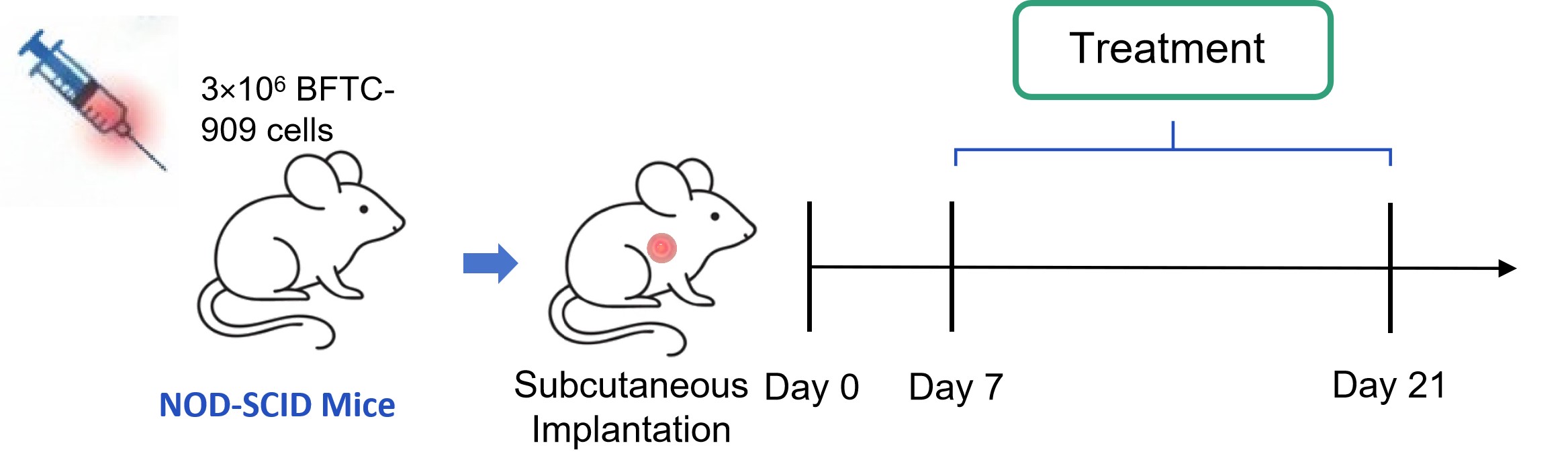 Fig. 2 Workflow of BFTC-909 xenograft model establishment and treatment regimen. (Source: Alfa Cytology)
In Vivo Efficacy Evaluation
This study employed the established BFTC-909 urothelial carcinoma xenograft model to systematically evaluate the therapeutic effects of WEE1 inhibitor Drug A monotherapy and its combination with cisplatin on tumor progression.
- Drug A Monotherapy: Compared to the vehicle control, drug A monotherapy demonstrated moderate tumor growth inhibition, delaying tumor progression without achieving complete regression.
- Drug A and Cisplatin Combination Therapy: The combination of drug A with cisplatin resulted in significantly enhanced antitumor efficacy, leading to marked tumor volume reduction, increased apoptosis, enhanced DNA damage, and suppressed proliferation.
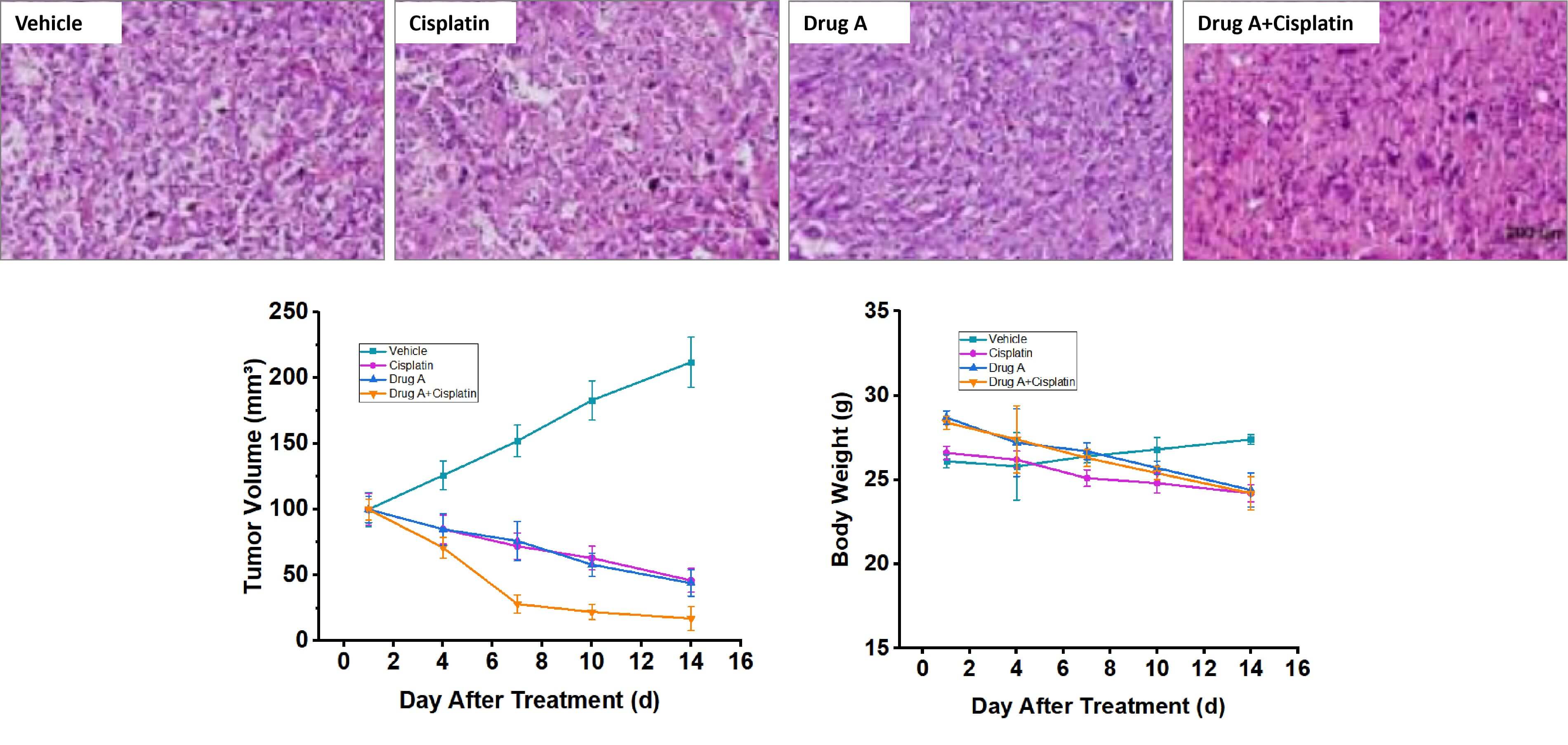 Fig. 3 Antitumor efficacy of drug A in the BFTC-909 xenograft model. (A) Tumor volume. (B) Body weights. (C) Representative tumor images. Data are presented as mean ± SEM. (Source: Alfa Cytology)
Contact Us
At Alfa Cytology, we are dedicated to conducting extensive research and analysis on urothelial carcinoma, encompassing molecular biology services, cancer biomarker discovery services, and preclinical research services, all under one roof. For further information regarding our urothelial carcinoma research and development services or to inquire about our comprehensive range of services, please do not hesitate to contact us.
For research use only. Not intended for any clinical use.
Related Services