Bladder Cancer Cell Line Customization Service
Stable cell lines are important research tools for drug discovery, compound screening and gene therapy research. Alfa Cytology provides customized stable cell lines for bladder cancer research.
Bladder Cancer Cell Lines
Bladder cancer is a significant health concern worldwide, with a high prevalence and associated morbidity and mortality rates. Researchers and clinicians strive to find early diagnostic tools and effective treatments for bladder cancer. In the field of preclinical research, bladder cancer cell lines play a vital role in understanding the disease's biology, testing novel therapeutics, and developing predictive models.
Cell line sources for bladder cancer research:
 Human BC Cell Lines
- Low-grade cancer cell lines, such as RT4 and RT112.
- High-grade ones, such as T24, J82, 5637, UM-UC1, UM-UC3, HB-CLS-2, TCCSUP and EJ-1
Other Cell Lines
- Dog BC cell lines
- Rat BC cell lines
- Mouse BC cell lines
Cell lines can be easily modified to stably express transgenes, reporter gene structures, and targeted gene alterations. Such modifications greatly expand the range of applications for such models. For example, the modification of tumor-like organs to express bioluminescent probes can be used to model in situ patient-derived xenografts (PDX), enabling real-time visualization of tumor response to therapy and assessment of response in the relevant tumor environment (TME).
Our Services
Alfa Cytology, a leading preclinical Contract Research Organization (CRO), offers comprehensive services in the field of bladder cancer, including customized cell line development and characterization. Our services include but are not limited to:

CRISPR Knockout Cell Lines
Using the revolutionary CRISPR-Cas9 gene editing technology, we can help our clients precisely disrupt specific genes of interest in bladder cancer cell lines.

Knockdown Cell Lines
Through the use of RNA interference (RNAi) technology, we can efficiently reduce the expression of target genes in bladder cancer cell lines.

Overexpression Cell Lines
We provide services for generating bladder cancer cell lines with controlled and stable overexpression of target genes.

Knockin Cell Lines
Our knockin cell line services allow for the precise integration of exogenous DNA sequences into bladder cancer cell lines.

Reporter Cell Lines
We offer the development of reporter cell lines utilizing various reporter genes, including luciferase, GFP, RFP, and YFP.

Primary Cell Line
We specialize in the establishment and characterization of conditionally reprogrammed cells (CRCs) from patient-derived bladder cancer tissues.
Our Services Will Help You Achieve the Goals as Follows:
Genetically engineered cell models are increasingly being used to enable the following types of research related to drug discovery and development:
- Drug resistance
- Therapeutic response monitoring
Case Study - The RT-4 Cell Model
Model Introduction
The RT-4 human bladder cancer cell line, established from a primary papillary bladder tumor, serves as a well-established model for studying low-grade, non-muscle invasive bladder cancer (NMIBC). Characterized by its epithelial morphology, wild-type TP53 and FGFR3 mutations, this cell line demonstrates reliable tumorigenicity and is particularly valuable for evaluating anti-angiogenic and targeted therapies in bladder cancer.
Model Information
- Origin: Human primary papillary bladder tumor.
- Classification: Bladder urothelial carcinoma (transitional cell carcinoma) cell line.
- Genetic Background: Features wild-type TP53 and characteristic FGFR3 mutations associated with papillary NMIBC.
- Morphology: Epithelial-like.
- Growth Pattern: Adherent.
- Key Markers: Expresses urothelial differentiation markers; suitable for studies of angiogenesis inhibition and targeted therapy response.
- Cancer Type: Non-Muscle Invasive Bladder Cancer (NMIBC), Papillary Urothelial Carcinoma.
Model Validation (In Vivo)
The tumorigenicity utility of the RT-4 cell line was validated through establishment of a subcutaneous xenograft model in immunodeficient C-NKG mice. RT-4 cells (5×10⁶ cells/mouse) were inoculated into 7-week-old mice, with tumors reaching approximately 90 mm³ by day 8 post-inoculation, at which point animals were randomized into treatment groups. Mice received either vehicle control or Lenvatinib (20 mg/kg, oral gavage, once daily) for 7 weeks. Lenvatinib is an oral multi-kinase inhibitor that selectively inhibits VEGF receptors and other oncogenic signaling pathways
Model Data
- Growth Kinetics: Tumor growth is rapid and consistent. Approximately 8 days post-inoculation, tumors reach 100-200 mm3 (initiating treatment).
- Treatment Efficacy: On day 49, Lenvatinib treatment resulted in significant tumor growth inhibition, with mean tumor volumes of 176.8 mm3 compared to 433.5 mm3 in the control group.
- Statistical Significance: The observed tumor growth inhibition rate (TGI) of 59.2% was statistically significant, confirming Lenvatinib's potent anti-tumor activity against RT-4 xenografts.
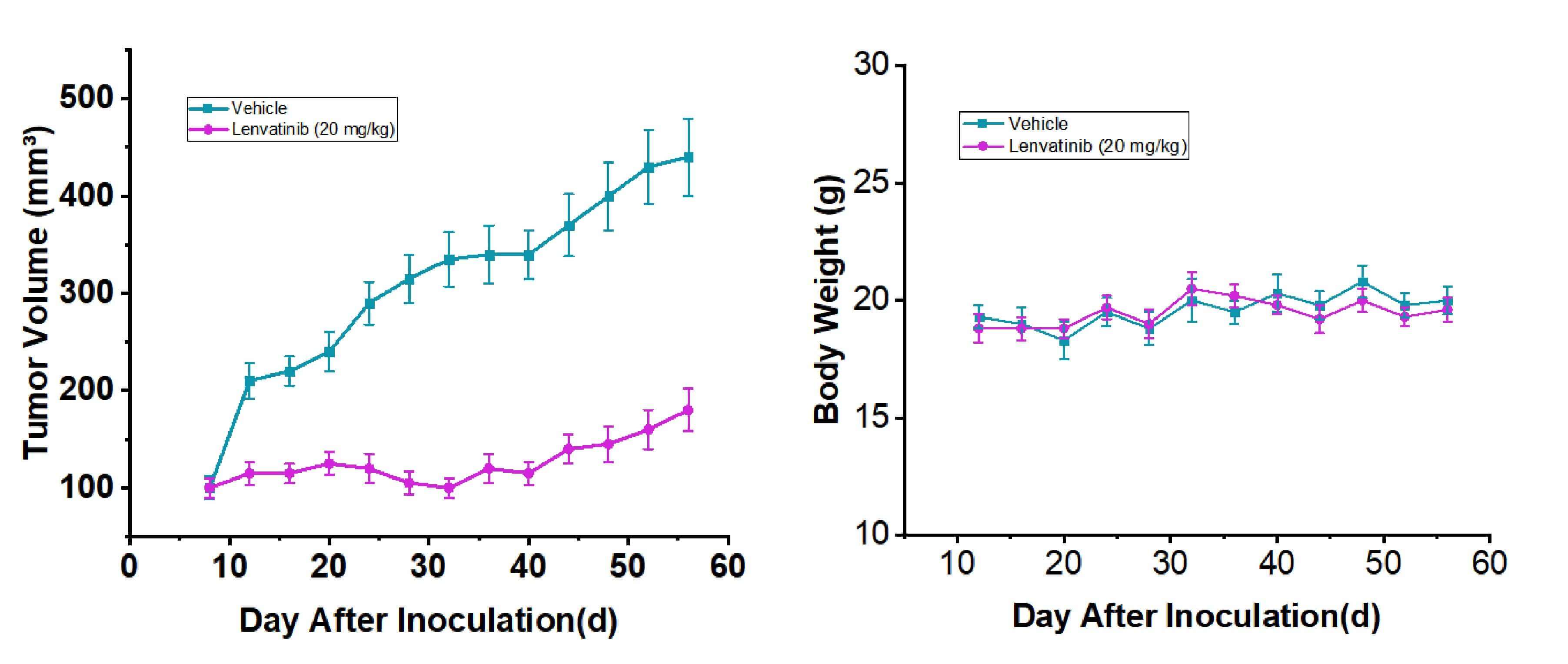 Fig. 1 Tumor volume and body weight growth curve of bladder cancer RT-4 cell line subcutaneous implantation (n=6). Data are presented as mean ± standard error (SEM). (Source: Alfa Cytology)
Contact Us
Alfa Cytology is dedicated to providing high-quality bladder cancer cell line customization services to support researchers and pharmaceutical companies in their quest for novel therapeutics and personalized treatment strategies. To learn more about our services or to discuss your specific research needs, please contact us.
Reference
- Daneshdoust D., Yin M., and et al. Conditional Reprogramming Modeling of Bladder Cancer for Clinical Translation. Cells. 2023, 12, 1714.
For research use only. Not intended for any clinical use.
Related Services


